
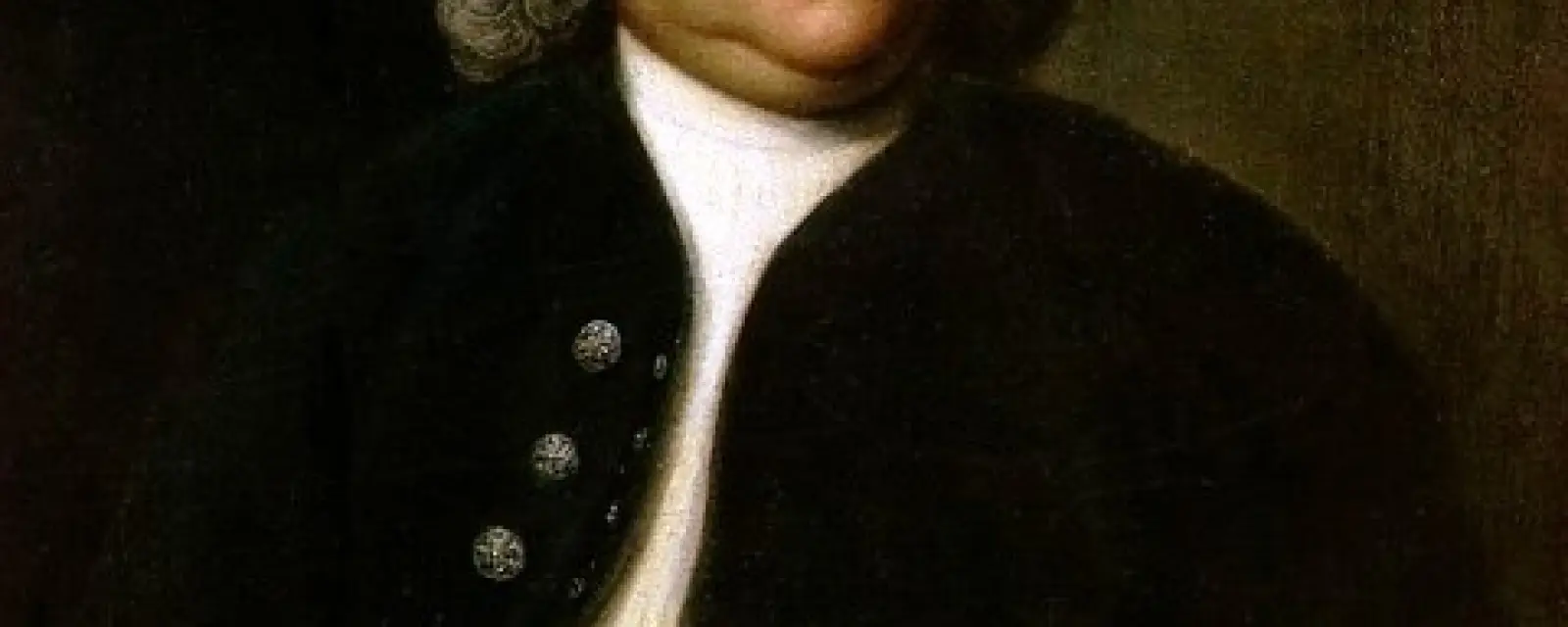
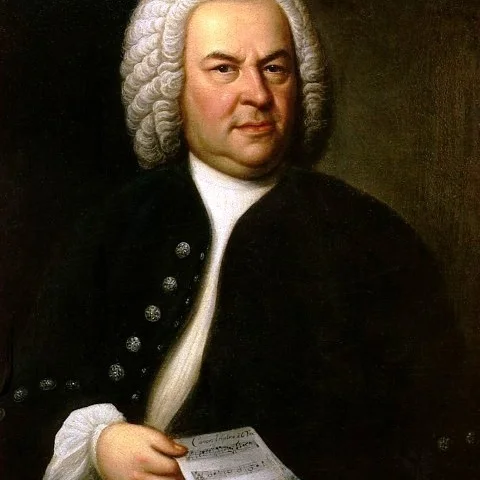
Johann Sebastian Bach
In the collection
9 records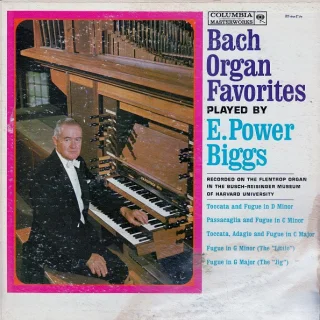 Bach Organ Favorites
Bach / E. Power Biggs, 1961
Bach Organ Favorites
Bach / E. Power Biggs, 1961
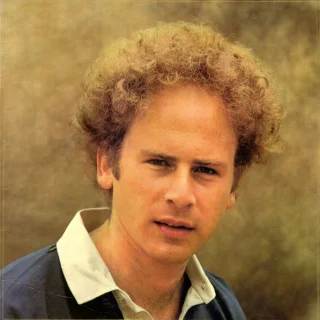 Angel Clare
Garfunkel, 1973
Angel Clare
Garfunkel, 1973
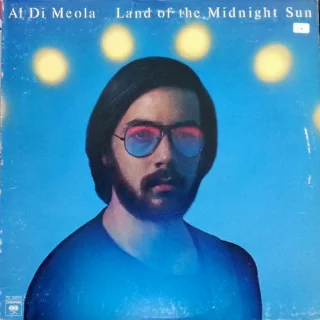 Land Of The Midnight Sun
Al Di Meola, 1976
Land Of The Midnight Sun
Al Di Meola, 1976
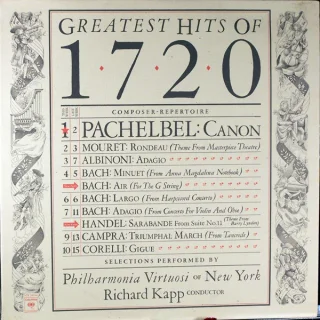 Greatest Hits Of 1720
Philharmonia Virtuosi of New York, Richard Kapp, 1977
Greatest Hits Of 1720
Philharmonia Virtuosi of New York, Richard Kapp, 1977
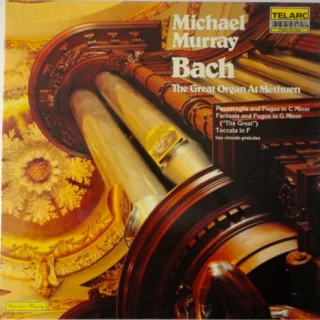 The Great Organ At Methuen
Bach, Michael Murray, 1980
The Great Organ At Methuen
Bach, Michael Murray, 1980
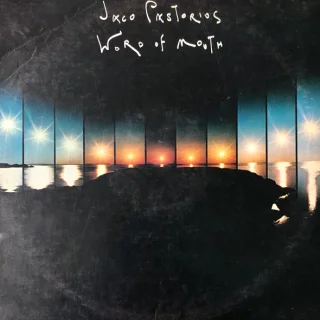 Word Of Mouth
Jaco Pastorius, 1981
Word Of Mouth
Jaco Pastorius, 1981
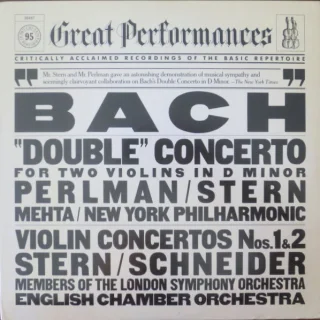 Double Violin Concerto & Violin Concertos Nos. 1 & 2
Bach, Isaac Stern, Itzhak Perlman, Zubin Mehta, New York Philharmonic, Members Of The London Symphony Orchestra, English Chamber Orchestra, 1983
Double Violin Concerto & Violin Concertos Nos. 1 & 2
Bach, Isaac Stern, Itzhak Perlman, Zubin Mehta, New York Philharmonic, Members Of The London Symphony Orchestra, English Chamber Orchestra, 1983
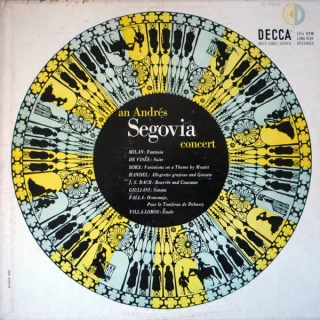 An Andrés Segovia Concert
Andrés Segovia
An Andrés Segovia Concert
Andrés Segovia
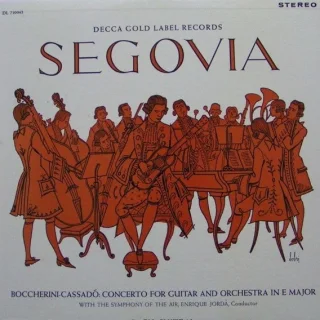 Concerto For Guitar And Orchestra In E Major / Bach Suite No.3
Segovia - Boccherini, Cassadó, Bach - Enrique Jordá And Symphony Of The Air
Concerto For Guitar And Orchestra In E Major / Bach Suite No.3
Segovia - Boccherini, Cassadó, Bach - Enrique Jordá And Symphony Of The Air
Played with
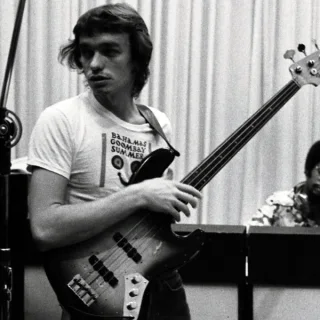 Jaco Pastorius
2 records together
Jaco Pastorius
2 records together
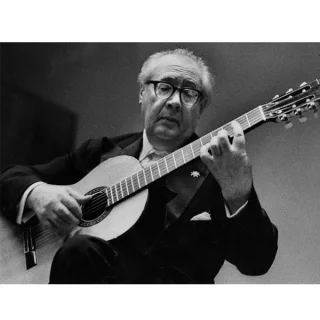 Andrés Segovia
2 records together
Andrés Segovia
2 records together
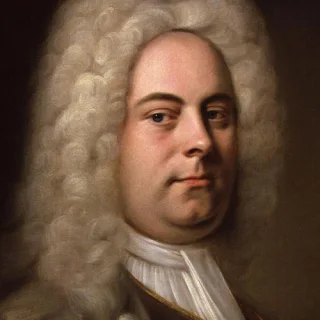 Georg Friedrich Händel
2 records together
Georg Friedrich Händel
2 records together
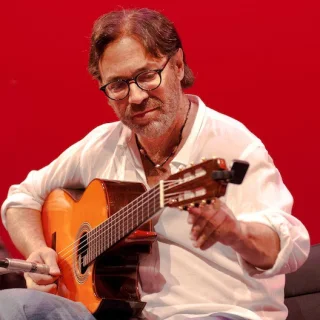 Al Di Meola
1 record together
Al Di Meola
1 record together
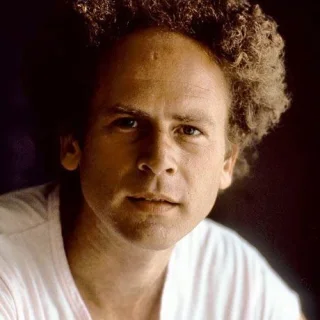 Art Garfunkel
1 record together
Art Garfunkel
1 record together
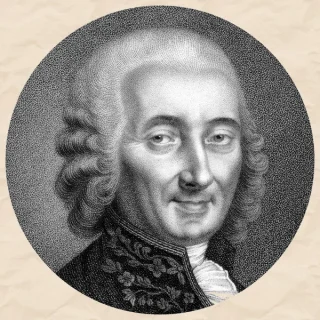 Luigi Boccherini
1 record together
Luigi Boccherini
1 record together
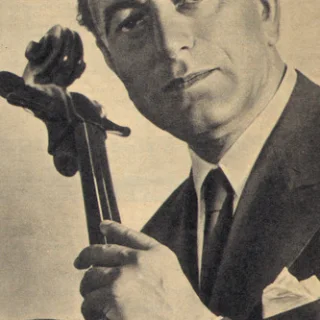 Gaspar Cassadó
1 record together
Gaspar Cassadó
1 record together
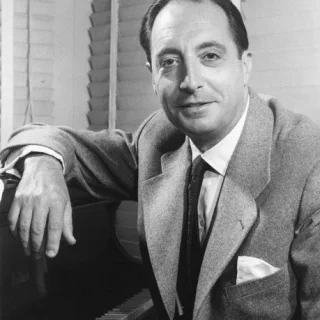 Enrique Jordá
1 record together
Enrique Jordá
1 record together
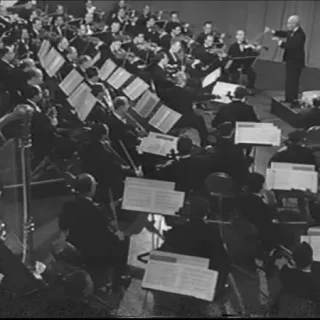 Symphony Of The Air
1 record together
Philharmonia Virtuosi
1 record together
Symphony Of The Air
1 record together
Philharmonia Virtuosi
1 record together
 Richard Kapp
1 record together
Richard Kapp
1 record together
 Isaac Stern
1 record together
Isaac Stern
1 record together
About
Johann Sebastian Bach was born on March 21, 1685 in Eisenach, Thuringia, Germany. A prolific German composer and organist, his sacred and secular works for choir, orchestra and solo instruments drew together the strands of the baroque genre and brought it to its ultimate maturity. Although he introduced no new forms, he enriched the prevailing German style with a robust contrapuntal technique, a control of harmonic and motivic organisation from the smallest to the largest scales, and the adaptation of rhythms and textures from abroad, particularly Italy and France. Many people consider him to be the greatest Baroque composer, and one of the greatest composers of all time. From 1723 until his death he was Thomascantor at Leipzig.
In a scholarly context, the appearance of “BWV” on phonographic works—regardless of audio formats—signals far more than a simple catalog reference. It functions as a formal academic designation that situates Johann Sebastian Bach’s music firmly within the framework of modern musicology. Established in the mid-20th century through the Bach-Werke-Verzeichnis, BWV numbers provide a standardized system that allows scholars, performers, and listeners to identify, compare, and study Bach’s compositions with precision and consistency.
Revered for their intellectual depth, technical command and artistic beauty, J.S. Bach’s works include the Brandenburg concertos, the keyboard suites and partitas, the Mass in B Minor, the St. Matthew Passion, The Musical Offering, The Art of Fugue and a large number of cantatas, of which about 220 survive. He died on July 28, 1750.
Some of his sons also became composers - Carl Philipp Emanuel Bach, Johann Christian Bach, Wilhelm Friedemann Bach and Johann Christoph Friedrich Bach.